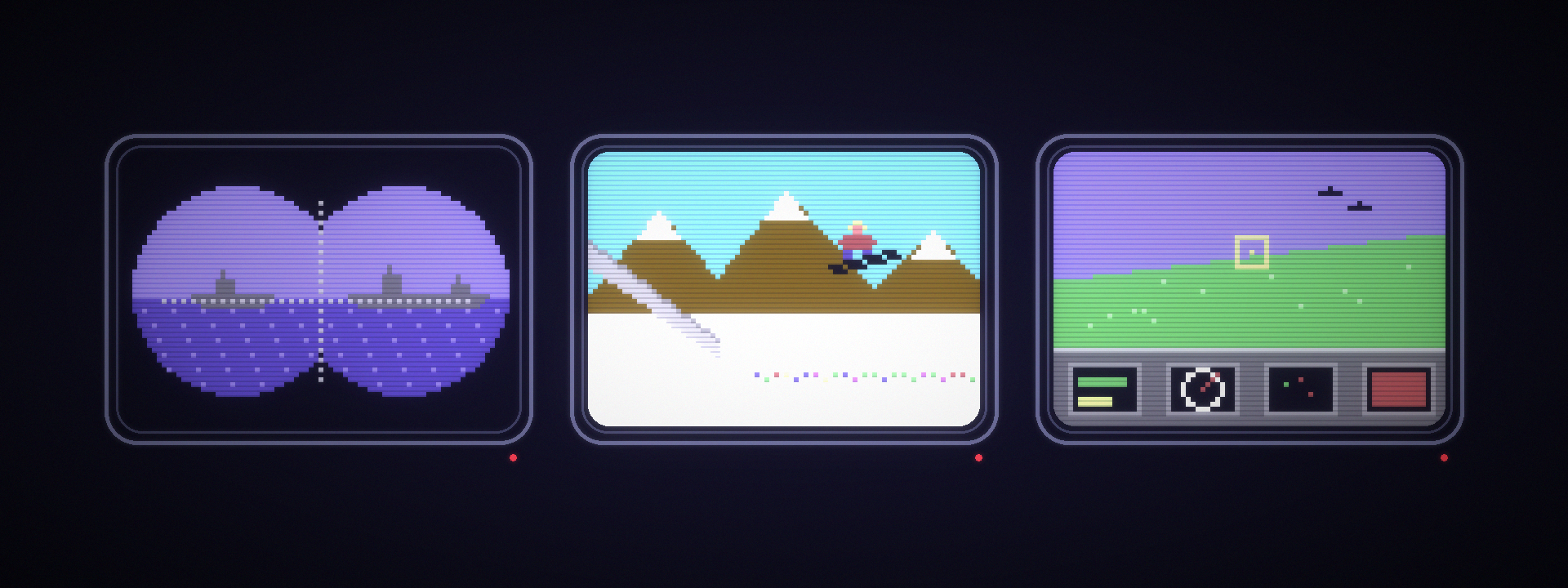
This is part 3 of my series on the history of computer games. Start with part 1, which covers everything up to 1980.
From now on, one post per year. 1985 is a good place to start: the 8-bit home computers were at their peak, the next generation of machines arrived, and Nintendo quietly started fixing the American console market it had watched collapse two years earlier.
I was eight years old in 1985, and I didn't have a computer of my own yet. Almost everything in this post is something I played later, on a friend's computer, on my own machine from Christmas 1987 or on the NES. But these are the games that shaped the years I grew up in, so they belong here. At the end of this post, and every post from now on, I'll list my own favourites from the year.
The new machines
Commodore 128
Commodore showed the Commodore 128 at CES in Las Vegas in January 1985, and it sold for $299. It was really three computers in one: a C128 mode with the new BASIC 7.0 and an 80-column display, a CP/M mode using a built-in Z80 processor, and a C64 mode that was almost 100 percent compatible. Around 2.5 million were sold.
In practice, most people used it as a C64. Very few games were ever written for the C128's own mode. I know, because this is the computer I got for Christmas 1987. I played C64 games on it like everyone else, but its better BASIC is also where I started programming. More about that when we get to 1987.
Atari ST
After leaving Commodore, Jack Tramiel had bought Atari's consumer division in 1984. His answer was the Atari 520ST, announced in January 1985 and widely available from July. It had a mouse, a graphical desktop and 512 KB of memory, and cost $799.99 with a monochrome monitor. The slogan was "Power Without the Price". It also had built-in MIDI ports, which made it a favourite among musicians for many years.
Amiga 1000
And then there was the Amiga. Commodore unveiled the Amiga 1000 on July 23, 1985, at a gala at the Vivian Beaumont Theater in New York, with Andy Warhol and Debbie Harry among the guests. It had custom chips for graphics and sound and a multitasking operating system, and it was far ahead of anything else in its price range. That price was $1,295, plus about $300 for the monitor, so it wasn't exactly a machine for kids yet. The Amiga's big years as a games machine came later, and so did my own Amiga memories.
Nintendo's comeback
On September 13, 1985, Nintendo released Super Mario Bros. for the Famicom in Japan. It sold 1.2 million copies in its first month and around 3 million within four months. It helped make the side-scrolling platform game the genre of the decade, and the original NES version went on to sell more than 40 million copies.
A month later, on October 18, 1985, Nintendo tested the Nintendo Entertainment System in New York. After the crash of 1983, American retailers didn't want anything to do with video game consoles, so Nintendo called it an entertainment system, shipped it with a robot accessory called R.O.B. and was strict about which games were allowed on it. Launch titles included Duck Hunt, Excitebike and Gyromite.
Sweden got the NES on September 1, 1986, and Super Mario Bros. reached Europe on May 15, 1987. So my NES memories come a bit later, but the games are from here. The first NES games I played were, if I remember right, Kung Fu, Nintendo's own conversion of Irem's arcade game Kung-Fu Master, and Excitebike, with Super Mario Bros. soon after. Kung Fu came out in Japan in June 1985 and in the US on launch day in October, but didn't reach Europe until 1987.
Duck Hunt I only played much later. Technically, though, it has a clear link to the shooting games on my grandfather's Pong box. The Zapper has no idea where the ducks are. When you pull the trigger, the screen goes black for one frame and the targets are drawn as white boxes on the next, and a light sensor in the gun simply checks whether it's pointing at something bright.
The C64 at its best
1985 was a great year for the Commodore 64, and a lot of the games I played on it later came out this year.
The year started with a game from late 1984. Activision's Ghostbusters, designed by David Crane and written in just six weeks to catch the film while it was still in cinemas, topped the UK charts from January to March 1985 and ended up the UK's fourth best-selling game of the year.
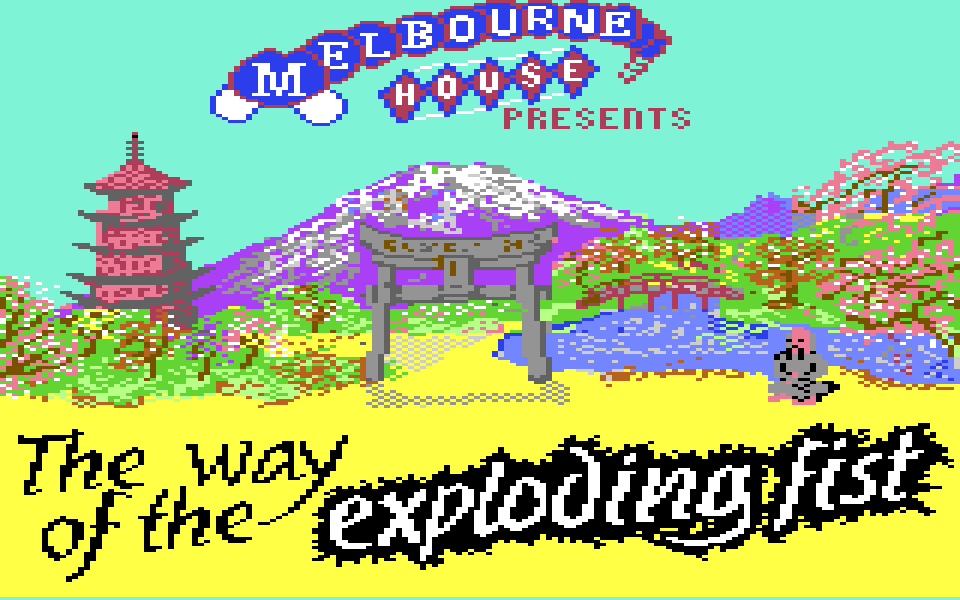
The Way of the Exploding Fist, released by Melbourne House in June 1985, was the best-selling computer game of the year in the UK and sold 500,000 copies across Europe. Its fighting was based on real karate competition rules, and it won Game of the Year at the Golden Joystick Awards.
Commando came out in the arcades in May 1985, and Elite Systems released the C64 version in November. The game is good, but the C64 version is remembered above all for its music. Rob Hubbard wrote it in under 12 hours, working through the night, and by the time everyone arrived at eight in the morning he had loaded the tune on every C64 in the building. It was one of the best-selling games in the UK that Christmas.
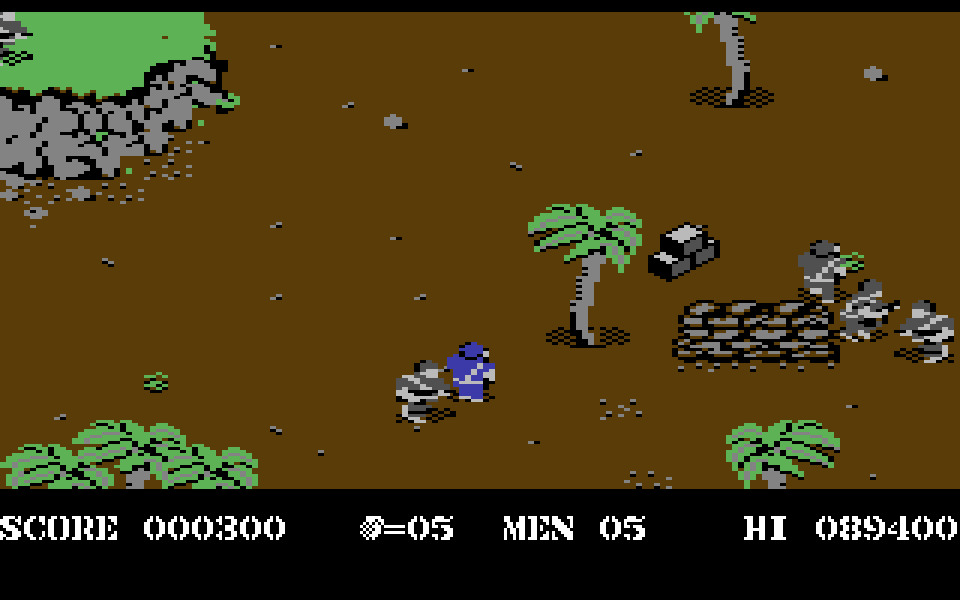
Screenshot: Lemon64
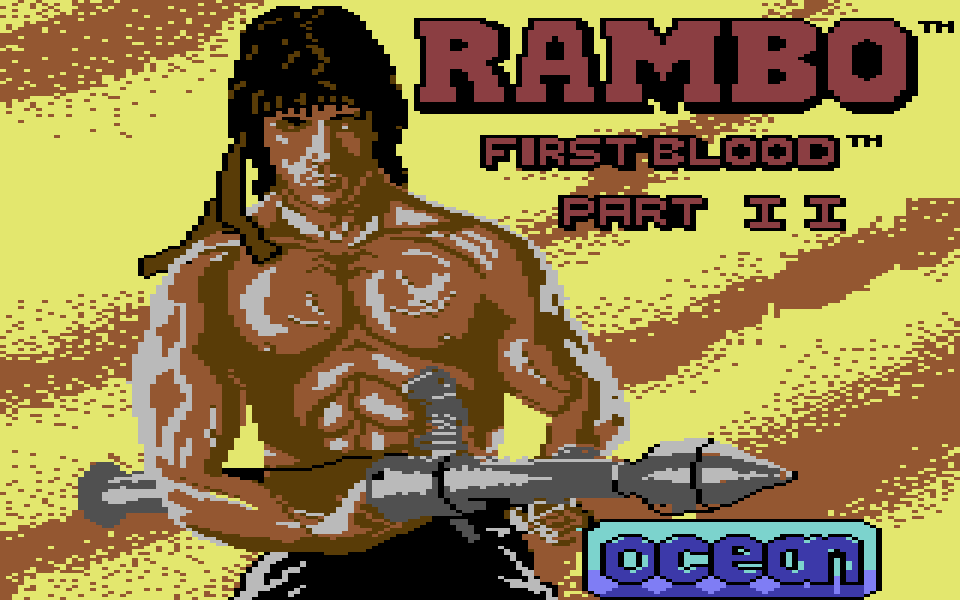
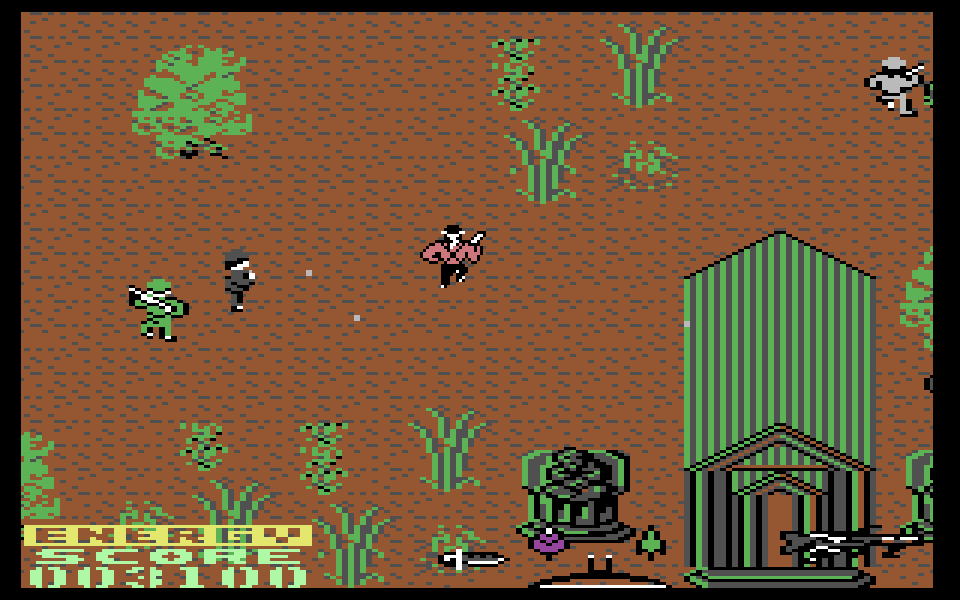
Ocean's Rambo: First Blood Part II played a lot like Commando, and it even replaced Commando at number one on the charts. Its C64 music was written by Martin Galway, the other big name in C64 music at the time.
Epyx followed up 1984's Summer Games with Winter Games in October 1985. Up to eight players could each pick a country and compete in events like ski jumping, bobsled, figure skating and biathlon. It became Epyx's best-selling Commodore game.
And MicroProse, which I wrote about in part 2, released Silent Service, Sid Meier's World War II submarine simulator. It sold around 400,000 copies and won the Charles S. Roberts Award for "Best Adventure Game for Home Computer of 1985".
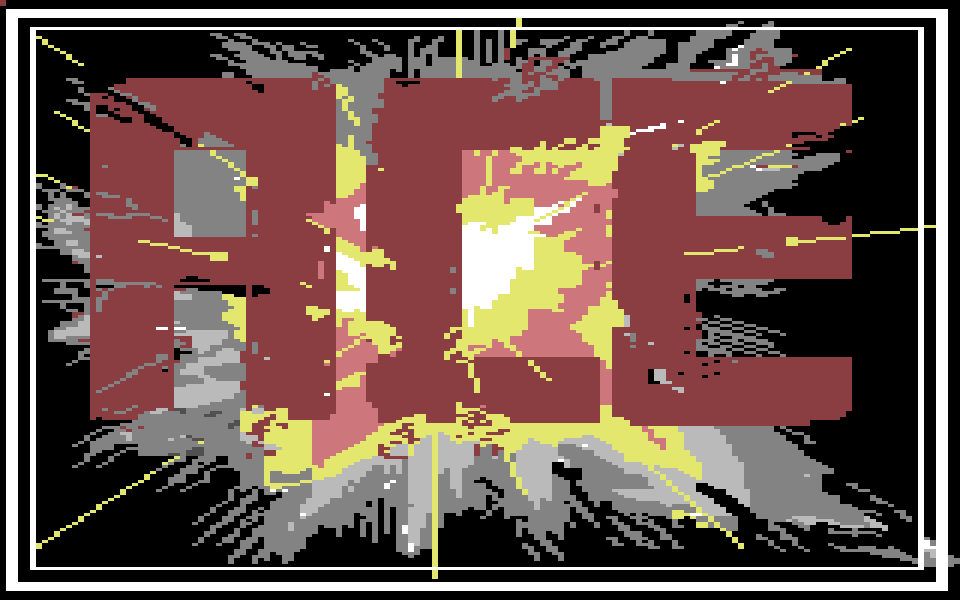
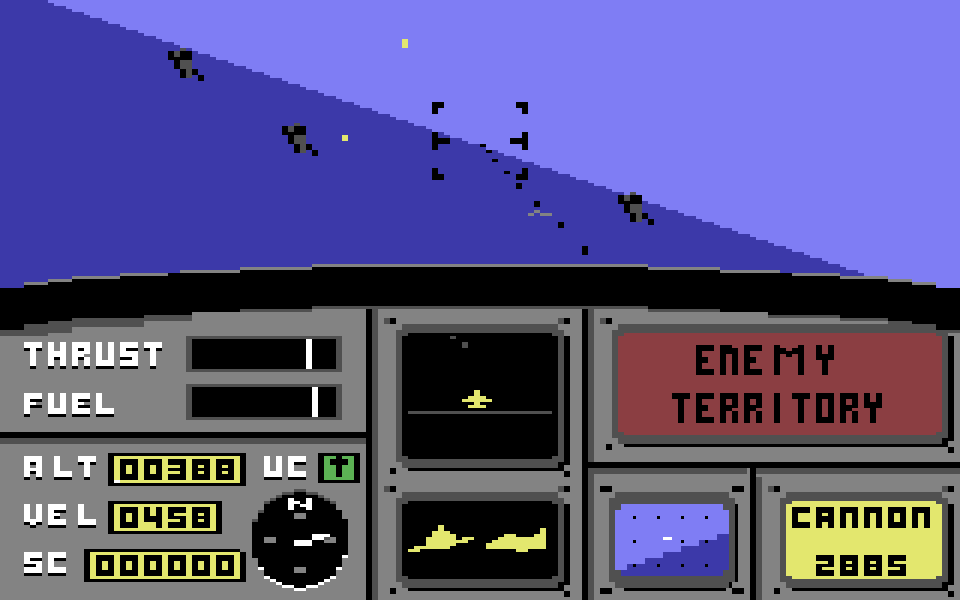
From the UK came ACE, short for Air Combat Emulator, from Cascade Games. It was a modern jet fighter game where you defended England's south coast, flying over a map and taking on enemy aircraft, ground targets and ships. It had weather settings, weapon loadouts and nine difficulty levels, and sold over half a million copies on 8-bit computers. I played it later, and I remember flying around the map picking out targets and missions.
One 1985 game I never got to play was U.S.A.A.F. - United States Army Air Force from SSI, designed by Gary Grigsby. It was a serious strategy game about the American daylight bombing of Germany during World War II. I remember reading a review of it and really wanting it, but it was far too expensive for me. Going through the old Datormagazin issues, I found that review again. It was in issue 10 of 1988, three years after the American release, and Hans Ekholm gave it 4.4 out of 5 and called it a must for anyone interested in the air war. Datormagazin had already written in 1987 that many of SSI's games from 1984 and 1985 had only just reached Sweden, U.S.A.A.F. among them. In a Swedish mail order ad from autumn 1987 it cost 229 kronor and came on disk only, while I was still on tape. Elsewhere it got good reviews, and Computer Gaming World called it "unsurpassed" for studying how German industry collapsed under the bombing. It sold poorly, though. A reviewer joked in 1993 that its fans were limited to himself and the designer.
A few more C64 games from 1985 deserve a mention. Paradroid by Andrew Braybrook got 97 percent in Zzap!64 and has been voted the best C64 game ever by Retro Gamer's readers. Little Computer People from Activision put a small person in a house inside your computer. There was nothing to win. You just looked after him, and it's often called a forerunner of The Sims.
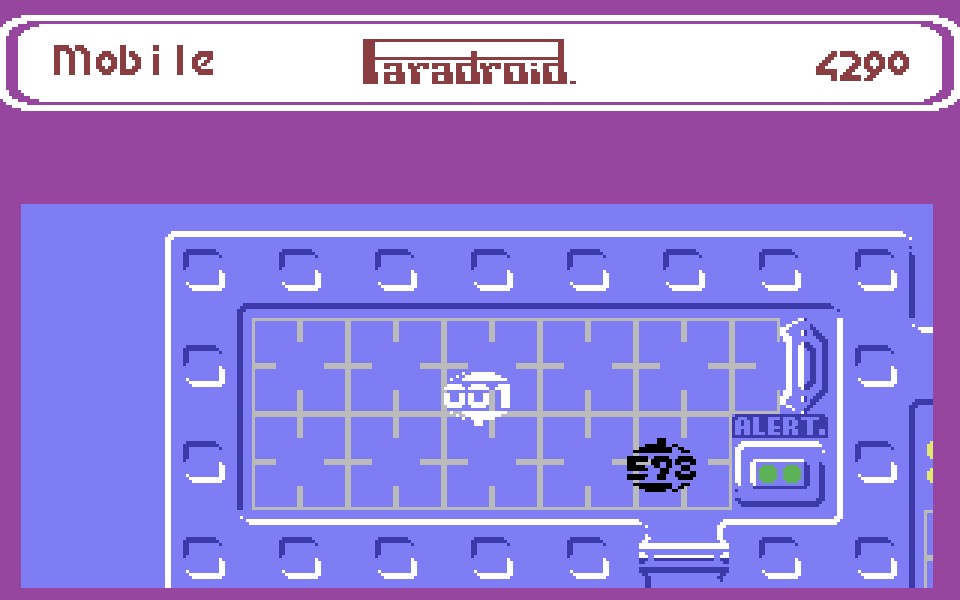
Screenshot: Lemon64
RPGs grow up
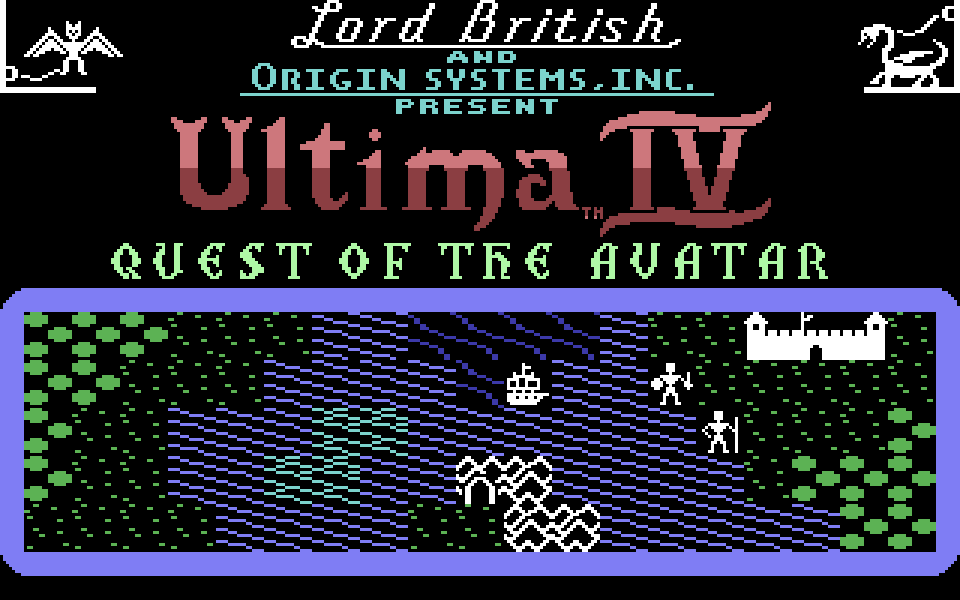
Ultima IV: Quest of the Avatar came out for the Apple II on September 16, 1985, with the C64 version in December. It was a very different kind of RPG. There was no big villain to defeat. Instead, the goal was to become an example to others by living by eight virtues, like honesty, compassion and humility, and the game kept track of how you behaved. Even your character creation was a series of moral questions from a fortune teller. It sold 400,000 copies by 1989.
Screenshot: Lemon64
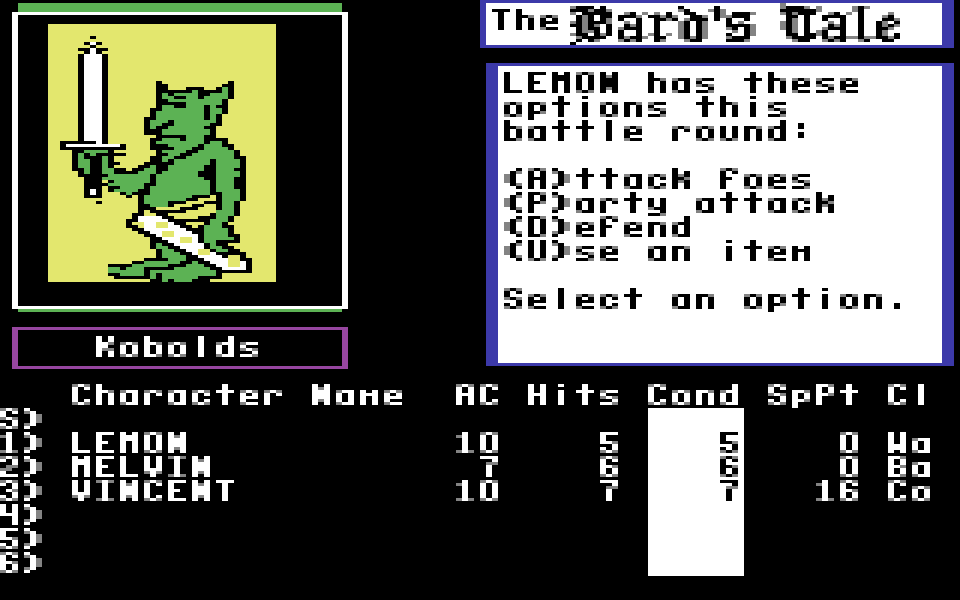
In December 1985, Interplay and Electronic Arts released The Bard's Tale for the Apple II and C64. It was a party-based dungeon crawler in the Wizardry tradition, and it became one of the best-selling computer RPGs of the 80s, with 407,000 confirmed copies sold.
Screenshot: Lemon64
In the arcades
The arcades had a strong year too: Paperboy from Atari Games with its handlebar controller, Gradius and Green Beret from Konami, Ghosts 'n Goblins from Capcom and Sega's Hang-On and Space Harrier. In October, Atari Games released Gauntlet, a dungeon crawler for four players at the same time, which topped the arcade charts into 1986.
I never played any of these in an arcade. I played them later on home computers: Green Beret, Gauntlet and Nemesis (the European name for Gradius) on the C64, Paperboy at home, and Ghosts 'n Goblins, probably on my friend's Spectrum. I hated Ghosts 'n Goblins for some reason. I still can't really say why.
New companies
Westwood Studios was founded in Las Vegas in 1985 by Brett Sperry and Louis Castle. It would matter a lot later, with Dune II and Command & Conquer. Codemasters, Square and Cinemaware are often mentioned together with it, but they all date from 1986, so they're in the next post.
My favourites from 1985
These are my favourite games from 1985. A note on how I sort them, since it applies to every post from now on: I list each game under the year it first came out, not the year it reached Sweden or the year I first played it. Many of these games reached me years later, on a different machine than the original, but this is where they belong. When it matters, I'll mention which version I played.
Silent Service
C64, 1985 (MicroProse)
Screenshots: Lemon64
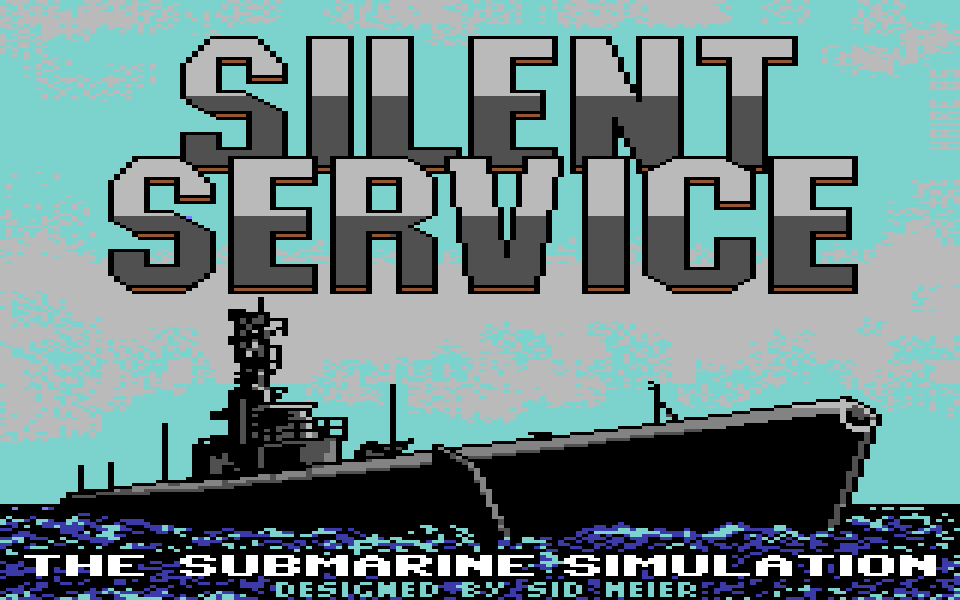
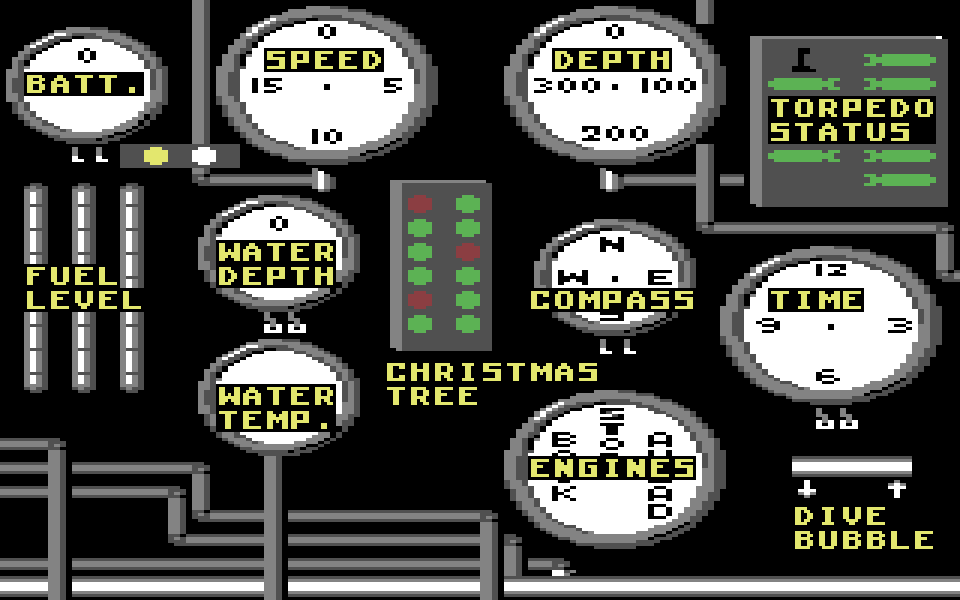
You command an American submarine in the Pacific during World War II, hunting Japanese convoys and trying to survive the destroyers that come after you. You switch between the bridge, the periscope, the charts and the damage report, and between the tense parts you speed up time. You can only have four torpedoes in the water at once, so every attack has to be planned.
I played this game on the C64 sometime in early 1988. Someone I knew who was a bit older than me owned a few MicroProse games, and this was one of them. I started buying MicroProse games really early, but not this one. It was the first submarine sim I played, even if it was a very arcade-style sim. Still, it's a submarine game, and I've played many since.
ACE
C64, 1985 (Cascade Games)
Screenshots: Lemon64
A modern jet fighter game where you defend England's south coast. You fly around a map picking your targets, from enemy fighters to ground targets and ships, with weather settings and weapon loadouts that made it feel like more than an arcade game.
I played this one quite late, after Gunship, but it was still one of the early flight sims I played. There was a Top Gun game on the C64, but it was very basic compared to this.
Winter Games
C64, 1985 (Epyx)
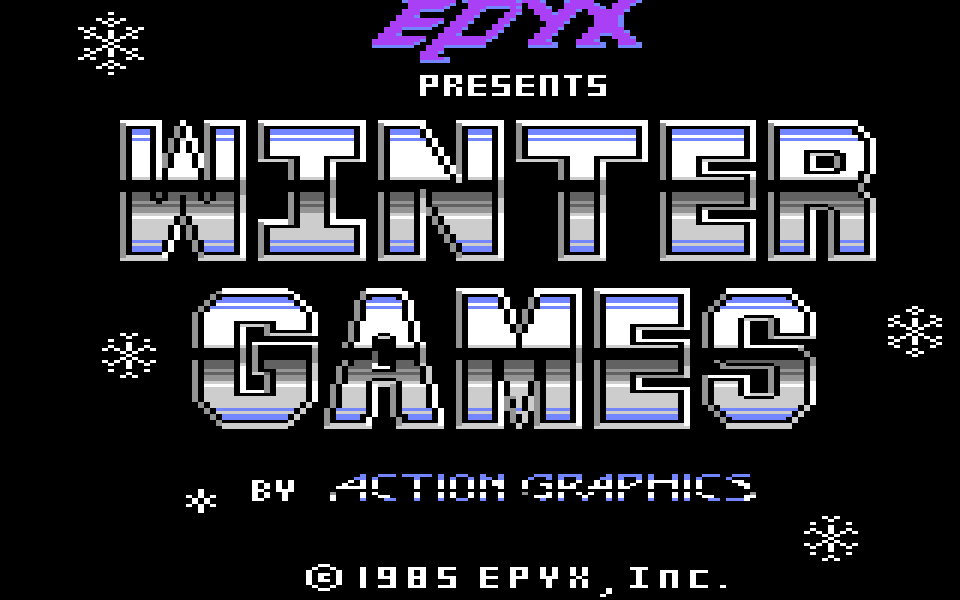
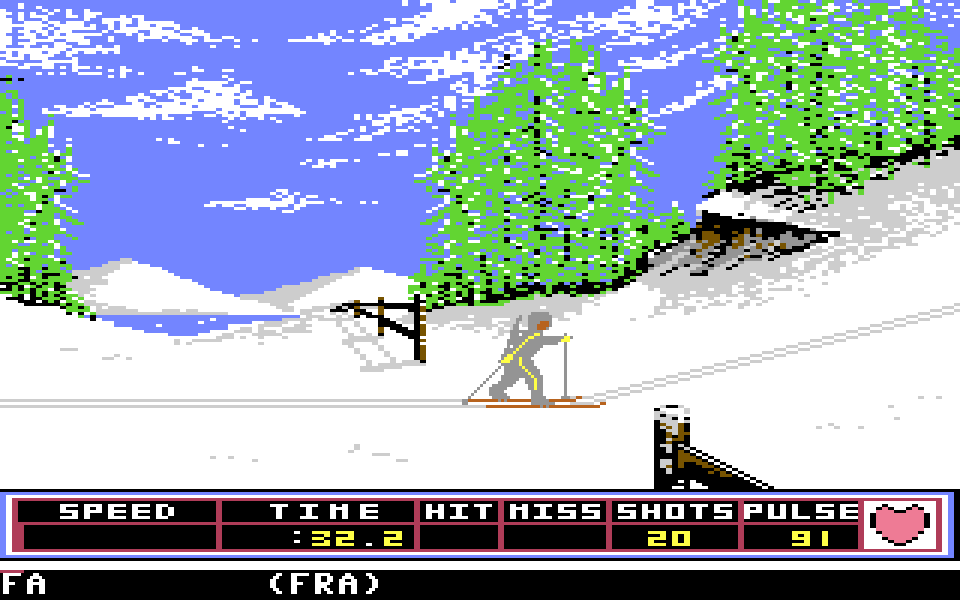
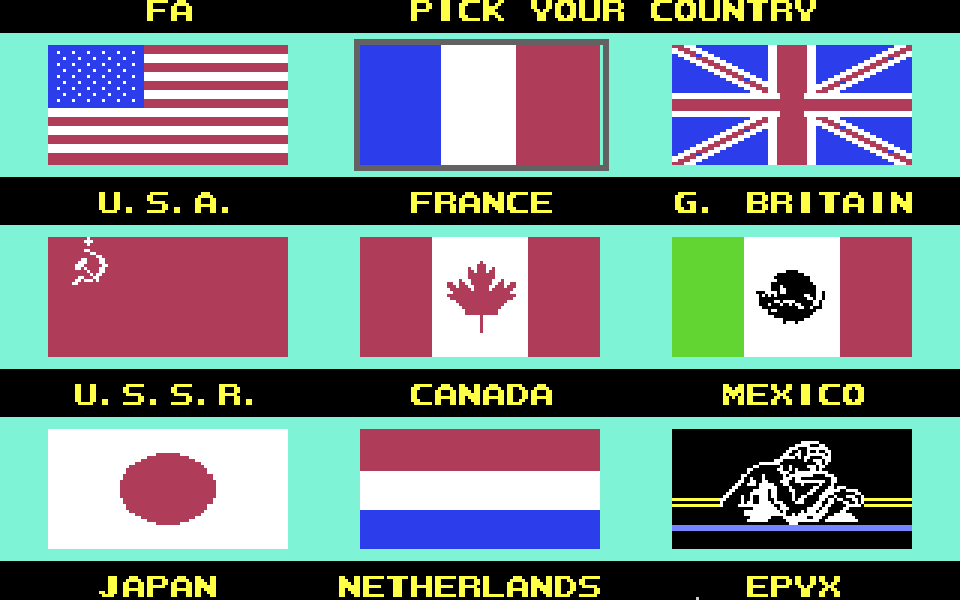
Pick a country and compete in the winter games. The events were short and easy to learn, and with up to eight players it was a perfect game to play with friends.
The first Epyx game I played was World Games, which I bought in 1988, but I played this a lot as well. It's a fun game, and I actually managed to complete the bobsled track several times without looking at the screen. It has the same quirks as other Epyx sports games: it doesn't include a lot of countries (no Sweden, for example), and the Soviet national anthem is replaced by "The Internationale".
Rambo: First Blood Part II
C64, 1985 (Ocean)
Screenshots: Lemon64
A top-down action game where you start with a knife and grenades, pick up better weapons like a bow and a rocket launcher, find the prison camp, rescue the prisoners and get out. Martin Galway's music is worth a listen on its own.
I bought this a few days after I got my first computer in 1987. It was part of Ocean's compilation Live Ammo, together with games like Top Gun, Green Beret and Army Moves. It's not one of the greatest games, but it was fun at the time, and for a 1985 game it's good. I like it better than Commando, for example.
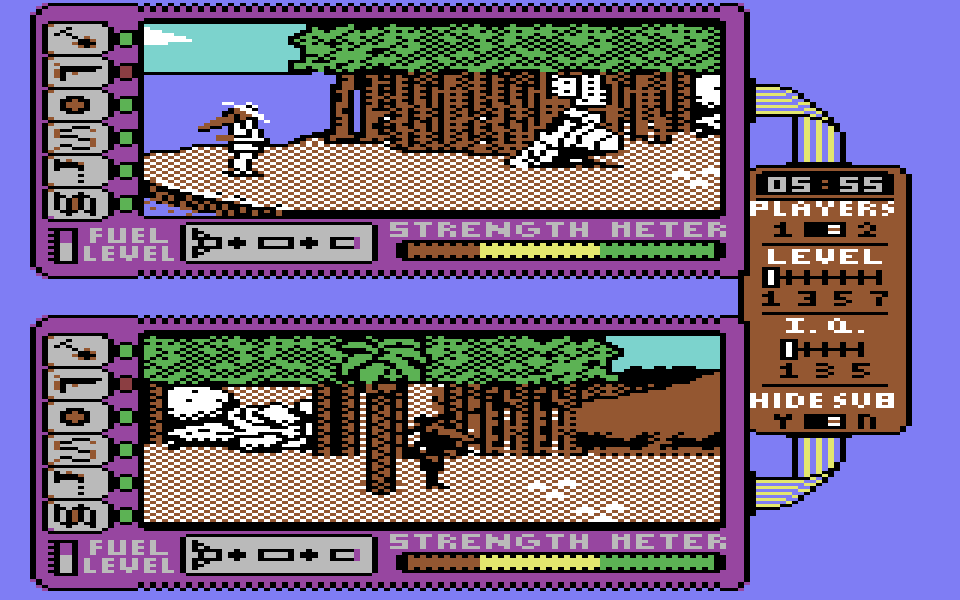
Spy vs. Spy II: The Island Caper
C64, 1985 (First Star Software)
Screenshots: Lemon64
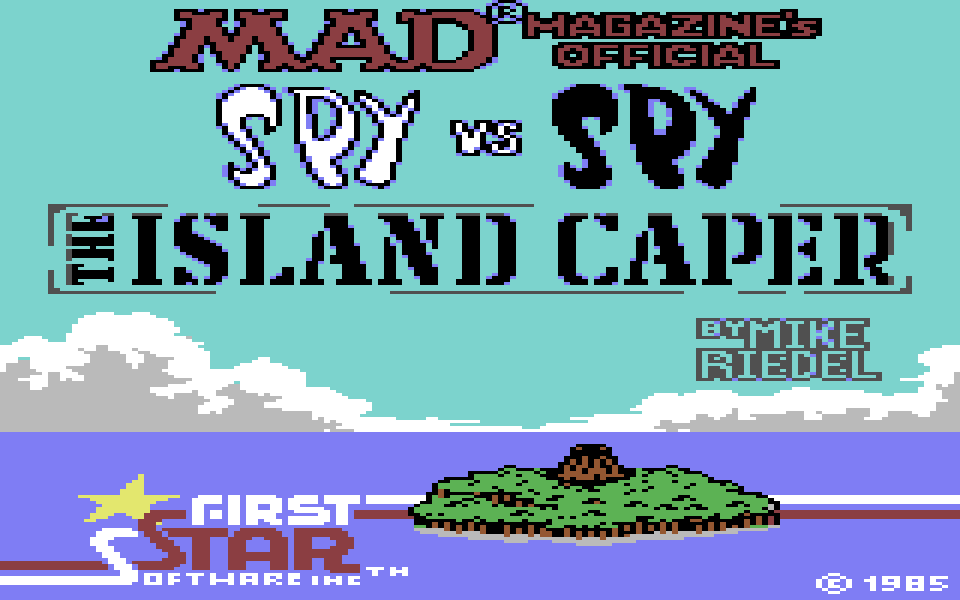
The black spy and the white spy from Mad magazine are back, this time on an island, fighting over the same goal on a split screen and setting traps for each other along the way. Unlike the first game, you no longer start with a set of traps but have to collect the materials to build them. Zzap!64 gave it 92 percent. I loved all three Spy vs. Spy games, but this is the one I remember best.
I played this game quite a lot, both on my own and with friends. A short but fun game. Most of my all-time favourites came later, but I still had fun playing this several years after it was first released.
Super Mario Bros.
NES, 1985 (Nintendo)
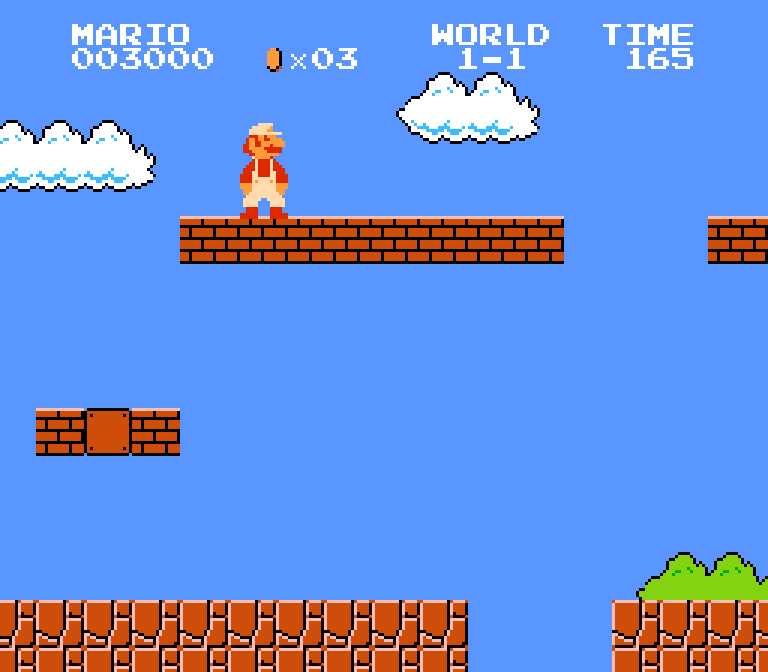
This game is legendary and doesn't need an introduction. It's a great example of an early platformer done well. Everyone played this.
This was one of the first NES games I played. I think the first time was when a friend and I rented a NES ourselves.
Paperboy
Arcade, 1985 (Atari Games)
Screenshots: Lemon64
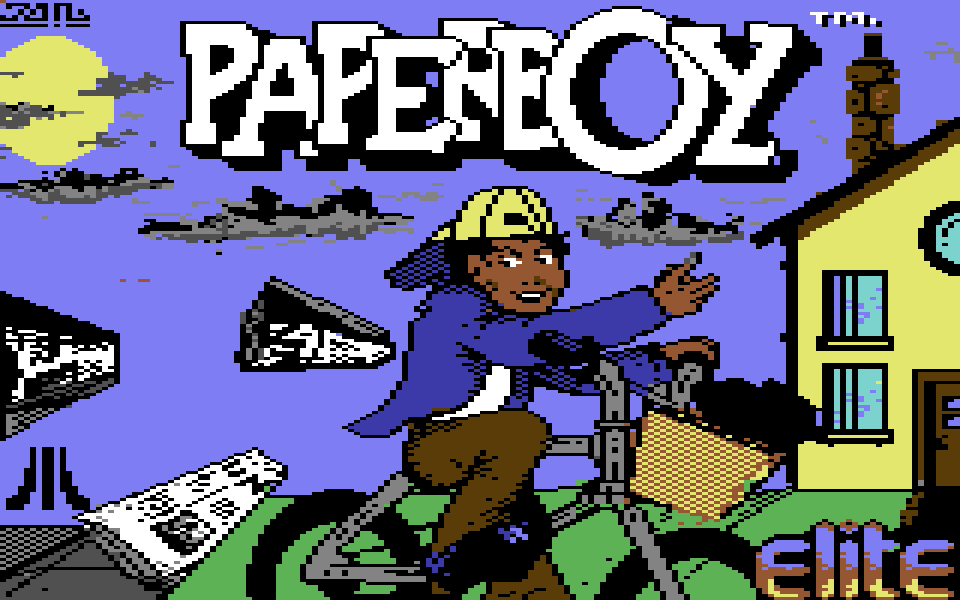
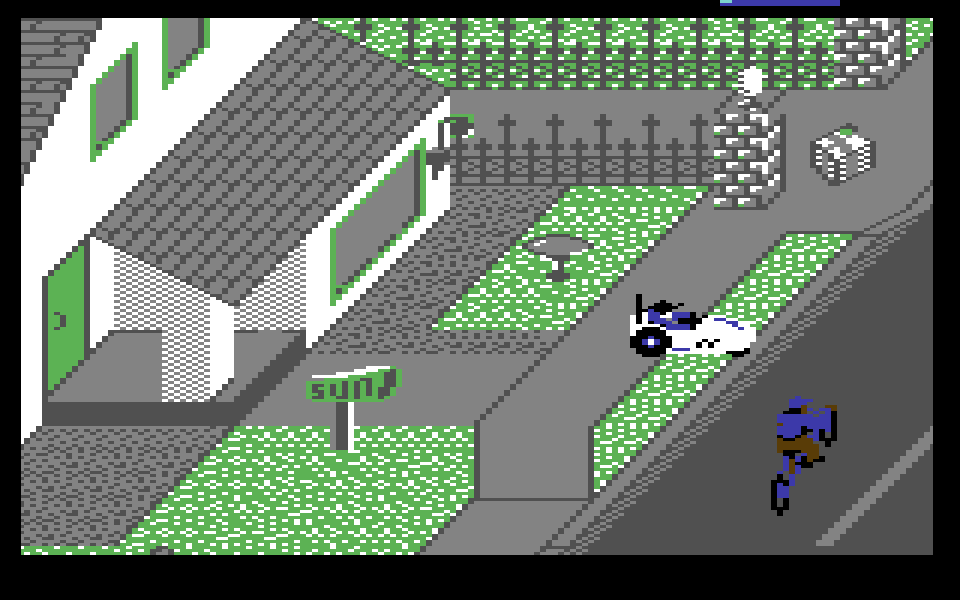
Deliver newspapers to the subscribers on your street without crashing, and get bonus points for breaking the windows of the people who don't subscribe. Elite Systems brought it to home computers from 1986.
Another game I played off and on to pass time. I still remember it, so it must have been great at the time.
Sources
- 1985 in video games (Wikipedia)
- Kung-Fu Master (Wikipedia)
- NES Zapper (Wikipedia)
- Commodore 128 (Wikipedia)
- Atari ST (Wikipedia)
- Amiga 1000 (Wikipedia)
- Super Mario Bros. (Wikipedia)
- Nintendo Entertainment System (Wikipedia)
- Video game crash of 1983 (Wikipedia)
- The Way of the Exploding Fist (Wikipedia)
- Commando (Wikipedia)
- Rambo: First Blood Part II, video game (Wikipedia)
- Winter Games (Wikipedia)
- Summer Games (Wikipedia)
- Silent Service (Wikipedia)
- ACE, video game (Wikipedia)
- U.S.A.A.F. - United States Army Air Force (Wikipedia)
- Paradroid (Wikipedia)
- Little Computer People (Wikipedia)
- Ultima IV: Quest of the Avatar (Wikipedia)
- The Bard's Tale (Wikipedia)
- Ghostbusters, 1984 video game (Wikipedia)
- Green Beret / Rush'n Attack (Wikipedia)
- Spy vs. Spy, 1984 video game (Wikipedia)
- Spy vs. Spy II: The Island Caper (Wikipedia)
- Datormagazin nr 3/1987, s. 19 ("Frontrapport"), nr 9/1987, s. 23 (Datalätt ad) and nr 10/1988, s. 16 (U.S.A.A.F. review by Hans Ekholm), via DMZArkivet
- Live Ammo (MobyGames)
- Westwood Studios (Wikipedia)
- Paperboy (Wikipedia)
- Gauntlet (Wikipedia)